Australian Car Finance Personal Loan Repayment Calculator
Calculate repayments with our Personal Loan Calculator. Compare loan terms, view repayment schedules, and plan your personal finance with confidence.
'Calculator results are estimates only and not quotes. Actual quotes will be provided by licensed brokers after you submit an enquiry.'
Personal Loan Details:
Important!
Personal Loan Interest Rates differ from lender to lender and will depend on your individual circumstances (credit history, employment status, age, etc.). To find out if you qualify ... and for a free, personalised interest rate and repayment quote,
please CLICK HERE
Personal Loan Amortisation Calculator
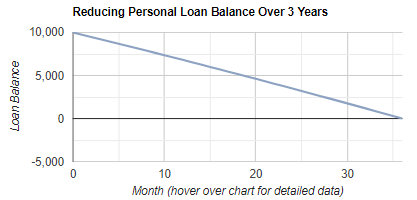
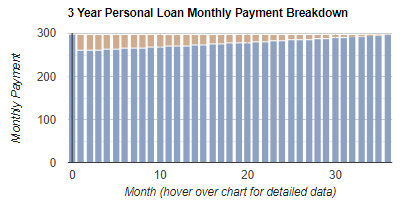
The following amortisation graphs detail month-by-month data on the progress of the proposed loan. The first chart below examines the reducing loan balance over the course of the finance contract term. The second graph illustrates the portion of each monthly repayment allocated to payment of interest vs principal reduction.
How to use our Personal Loan Repayment Calculator
Our Personal Loan Repayment Calculator helps you estimate your ongoing loan repayments and the total cost of borrowing before you apply. By adjusting the loan amount, loan term and interest rate, you can compare scenarios and choose a repayment level that better fits your budget. It also provides an amortisation view so you can see how each repayment is split between interest and principal over time.
Important note for ASIC compliance: this calculator provides general information only and does not take into account your objectives, financial situation or needs. Results are estimates and may not include lender fees, comparison rates, commissions, insurance, redraw features, or changes to your interest rate. Always check a lender’s final quote and loan contract before deciding.
How to complete the form for the best result
1. Loan Amount Required: Enter the total amount you want to borrow in Australian dollars as a whole number (no decimals or commas). Use the amount you actually need, not the maximum you might be approved for, to avoid overpaying interest.
2. Term of Loan: Select the number of years you plan to repay the loan over. A longer term can reduce the monthly repayment, but typically increases the total interest paid over the life of the loan.
3. Interest Rate: Choose an annual interest rate for the simulation. If you have a lender quote, use that rate. If not, test a conservative range to understand best case and worst case outcomes.
4. Calculate: Click the calculate button to generate your results.
How to interpret the results
1. Repayment estimate: Treat the repayment figure as your baseline commitment. Stress-test your budget by increasing the rate or shortening the term to see if repayments remain affordable.
2. Amortisation and graphs: Review the month-by-month amortisation view and charts to understand how the balance reduces and how early repayments often include a higher interest portion, shifting toward more principal over time.
3. Compare scenarios: Re-run the calculator with different terms and rates to balance affordability (cash flow) against total interest (overall cost).
As fuel prices continue to escalate, Australians are increasingly turning to electric vehicles (EVs) as a cost-effective alternative, leading to a notable surge in EV financing. Major banks, including National Australia Bank (NAB) and Commonwealth Bank of Australia (CommBank), have reported significant increases in EV loan applications, reflecting a growing consumer shift towards sustainable transportation. - read more
As the end of the financial year (EOFY) approaches, Chinese car manufacturers are rolling out aggressive sales strategies to capture a larger share of the Australian market. Brands such as Geely, Omoda-Jaecoo, and JAC Motors are offering a range of incentives, including low finance rates, cashback deals, and fuel vouchers, to attract both private buyers and commercial operators. - read more
In response to the Reserve Bank of Australia's (RBA) decision to raise the official cash rate by 25 basis points to 4.35% on 5 May 2026, Australia's major banks have announced corresponding increases in their loan interest rates. This move directly impacts borrowers, including those with car loans, as financial institutions adjust their rates to align with the central bank's policy. - read more
In May 2026, Toyota Australia expanded its electrified vehicle lineup by introducing the Hilux Battery Electric Vehicle (BEV) and the RAV4 Plug-in Hybrid Electric Vehicle (PHEV) to the local market. These additions reflect Toyota's commitment to providing diverse low-carbon solutions that cater to the varying needs of Australian consumers. - read more
When it comes to buying a car, understanding your financing options is crucial. In Australia, car financing can be complex, but it generally falls into a few categories. These include dealer finance, leasing, personal loans, and novated leases. Each option has its benefits and potential pitfalls, so it's essential to understand what's available and how each might suit your particular needs. - read more
The fuel situation in Australia has been a hot topic recently, with fluctuating prices and increasing environmental concerns capturing the attention of many. The country's reliance on both domestic and imported fuels, alongside global market influences, plays a significant role in the availability and cost of fuel. As Australians navigate through these changes, understanding the current scenario becomes ever more crucial. - read more
Car financing is a crucial aspect for many Australians looking to purchase a vehicle. Understanding the car finance market in Australia can equip you with the knowledge needed to make informed financial decisions. With various financing options available, taking the time to explore what's out there can be incredibly beneficial for aspiring car owners. - read more
When you're in the market for a new or used car, understanding car financing options is crucial. In Australia, there are several ways to finance your vehicle, each with its own advantages and considerations. Whether you're considering dealership financing, a car loan from a financial institution, or even leasing, knowing your options can save you in the long run. - read more
Knowledgebase
Monetary Policy: The actions of a central bank or other regulatory authority that determine the size and rate of growth of the money supply.