Australian Car Finance Car Loan Repayment Calculator
Calculate car loan repayments with our Car Loan Repayment Calculator. View detailed amortization charts to compare terms, track interest, and plan your budget with confidence.
'Calculator results are estimates only and not quotes. Actual quotes will be provided by licensed brokers after you submit an enquiry.'
Car Loan Details:
Important!
Car Loan Interest Rates differ from lender to lender and will depend on your individual circumstances (credit history, employment status, age, etc.). To find out if you qualify ... and for a free, personalised interest rate and repayment quote,
please CLICK HERE
Car Loan Amortisation Calculator
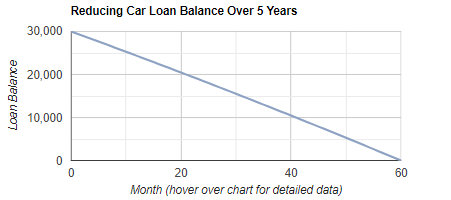
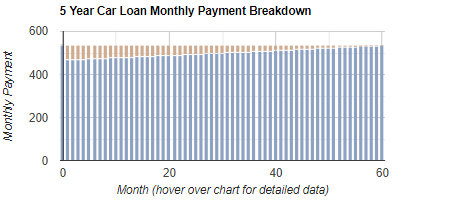
The following amortisation graphs detail month-by-month data on the progress of the proposed loan. The first chart below examines the reducing loan balance over the course of the finance contract term. The second graph illustrates the portion of each monthly repayment allocated to payment of interest vs principal reduction.
How to use our Car Loan Repayment Calculator
Our Car Loan Repayment Calculator helps you estimate repayments for an Australian car loan and see how your balance, interest and principal change over time. It is important because small changes to the loan amount, term or interest rate can materially affect your monthly budget and the total interest you pay. The amortisation charts make it easier to compare scenarios and choose a structure you can afford with confidence.
General information only: This calculator provides an estimate and does not take into account your objectives, financial situation or needs. Results are indicative and your actual interest rate and repayments will depend on the lender, your credit profile and the final loan contract (including fees and conditions).
How to complete each section for the best result:
1. Purchase Price
Enter the vehicle purchase price as a whole number (no decimals or commas). If you plan to borrow extra for on-road costs such as stamp duty, registration or insurance, include those amounts here so the estimate better reflects your likely loan size.
2. Deposit or Trade-in Value
Enter your cash deposit and/or trade-in value as a whole number. A higher deposit reduces the amount financed and usually lowers repayments and total interest.
3. Term of Loan (Years)
Select the number of years you want to repay the loan over. Shorter terms usually mean higher repayments but lower total interest. Longer terms can reduce monthly repayments but typically increase total interest paid.
4. Interest Rate (% per annum)
Select an interest rate to simulate. If you have a quote, choose the closest rate. If comparing options, run multiple calculations to see the impact of different rates.
5. Calculate
Click calculate to generate your results and charts.
How to interpret the results:
1. Repayment estimate: Use this as a starting point for affordability, leaving buffer for running costs and rate changes.
2. Amortisation charts: One chart shows the loan balance reducing over time; the other shows how early repayments are often interest-heavy and gradually shift toward principal repayment.
3. Comparison planning: Re-run the calculator with different terms, deposits and rates to identify a repayment level and total interest outcome that suits your budget.
Australia’s car market is moving further away from the shortage-driven conditions that shaped buying decisions over recent years. As more brands work through stronger supply and compete for orders, buyers are seeing a wider mix of drive-away discounts, factory bonuses, demonstrator offers and promotional finance campaigns. That can be helpful for households planning a purchase, but it also makes the finance decision more important rather than less. - read more
Fresh spring comparison updates suggest Australian car finance remains competitive, but not evenly so. While some headline secured car loan rates still look attractive for well-qualified borrowers, the gap between the best advertised offers and the rates many buyers may actually receive is becoming more important. For households planning a vehicle purchase, the key message is simple: the rate on the first screen is only the beginning of the finance conversation. - read more
The latest read on Australian vehicle lending suggests car buyers have not walked away from the market, even with household budgets still under pressure. As more cars become available and some dealers compete harder for orders, finance demand is being supported by buyers who see an opportunity to secure a vehicle without the same delays or mark-ups seen during the tightest supply years. - read more
Australian car buyers may find the finance process becoming more detailed as lenders place greater emphasis on household cash flow, existing debts and repayment buffers. While headline interest rates remain an important part of the decision, the bigger issue for many applicants is now whether their budget can comfortably support a new car commitment after everyday costs are included. - read more
Sustainability is an increasingly important factor in the automotive industry, as environmental awareness grows among consumers and manufacturers alike. Choosing a vehicle isn’t just about speed or comfort anymore; it's also about how your choice impacts the planet. With the rise of climate change concerns, more people are looking at sustainable options when purchasing their next car. - read more
Learn what Australian lenders may consider when assessing car loan eligibility, what documents may be needed, and how car finance pre-approval works before you buy. - read more
Secured and unsecured car loans can look similar at first, but the way the loan is backed can affect rates, eligibility, insurance expectations and what may happen if repayments are missed. This guide explains the key differences for Australian borrowers comparing car finance options. - read more
The fuel situation in Australia has been a hot topic recently, with fluctuating prices and increasing environmental concerns capturing the attention of many. The country's reliance on both domestic and imported fuels, alongside global market influences, plays a significant role in the availability and cost of fuel. As Australians navigate through these changes, understanding the current scenario becomes ever more crucial. - read more
Knowledgebase
Negative Amortization: A situation in which the loan payment for any period is less than the interest charged over that period, causing the loan balance to increase.